About me

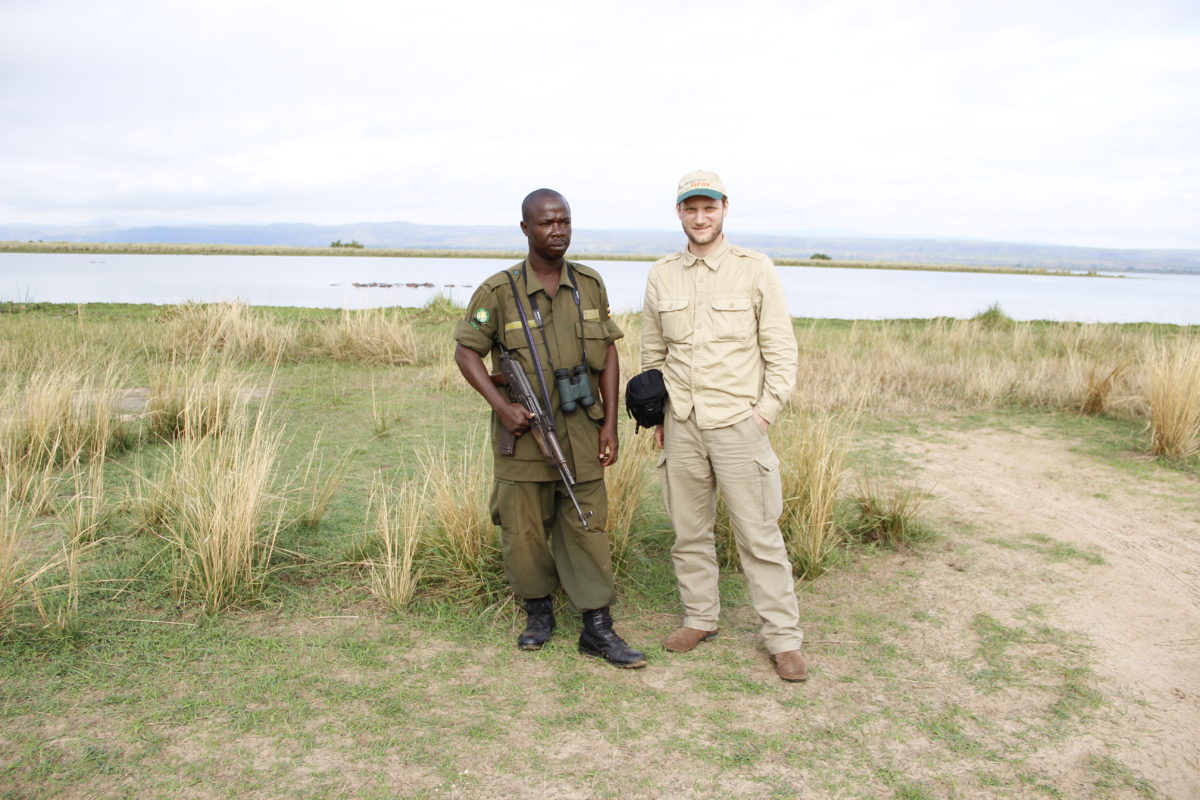
Born in Austria with family roots in South Tyrol, I work today as an agronomist and advisor in the field of agro-industrialization in West Africa, with a focus on tropical farming systems, conservation agriculture, soil management, and resource use in the Sahel and Sahara regions. My work combines practical field implementation with advisory roles for governmental and institutional actors and is grounded in long-term experience within local agroecological environments.

My approach is shaped less by theory than by direct field experience. I am interested in agricultural systems that function under real conditions — not in conference papers, but in dry seasons, poor soils, logistical limitations, and changing political environments. My work focuses on practical and locally adapted solutions that combine observation, agronomic knowledge, technical organization, and long-term productivity. Particular areas of interest include dryland farming systems, land use under arid conditions, and the structural development of agricultural production in tropical environments.

Before moving into West Africa, I spent several years in Lebanon, where I worked during and after the 2006 Lebanon War as a freelance journalist, NGO worker, and local fixer. Direct exposure to political instability, armed conflict, and fragmented social environments strongly shaped my understanding of crisis regions and geopolitical realities. During this period, I also gained first-hand insight into migration dynamics, refugee structures, and the political landscape of the broader Middle East.

Earlier stages of my career included environmental and humanitarian engagement, including environmental activism and refugee assistance. I also worked with Greenpeace as an Action- as well as Environmental Impact Photographer, contributing to several publications in international media. The documentary aspect of this work — combining field presence, logistics, and visual reporting — continues to influence my broader professional outlook.

After several years living in The Gambia, I am now primarily based in Senegal and have spent much of my professional and personal life moving between Africa, the Middle East, Latin America, Asia, and Europe. Alongside my agronomic work, I am active in geographic and scientific networks, including as Secretary General of the Gambia Geographic Explorer Club and as a member of the scientific advisory board of the African Relations Center (CRA) of the Italian Geographical Society (SGI) in Rome. My particular interest lies in endemic and native tree and shrub species of West Africa, especially their geobotanical characteristics, ecological adaptation, and phytogeographical distribution.

Alongside my fieldwork, I work with photography, analog film formats such as Super 8 and 16mm, and documentary writing. Even when using digital cameras, I still tend to work as if they were analog devices. I come from a time when there was no “fixing it later” — if the aperture, shutter speed, light, or framing were wrong, then the photograph was wrong. The image had to be made in the moment, not reconstructed afterward. I still work largely with that mindset today. For me, the finished image should remain the finished image: a document of a specific moment, with all the imperfections and authenticity that come with it.

Earlier interests such as mountaineering and caving later evolved into activities including bush flying, snorkeling, spearfishing, and wildlife protection, including involvement in wildlife crime investigation.

A constant element throughout my life has been the study of Far Eastern martial arts, particularly Japanese disciplines such as Aikido, which I approach primarily as a philosophical and cultural practice rather than a competitive sport.

Although shaped by movement across different regions and cultures, Italy — particularly the countryside and Etruscan landscapes around Rome — has become the place where I return to reset, work, and think clearly again. The older I get, the more I appreciate places where things were built to last, where landscapes still carry traces of long continuity, and where silence is still possible.

www.linkedin.com/in/thomas-kukovec-0a229522